From Lineout to Launch: The Throw-In as a Set Piece
Understand the rugby lineout throw-in as a planned restart, read the catch and support, and see how teams turn clean possession into their next attack.
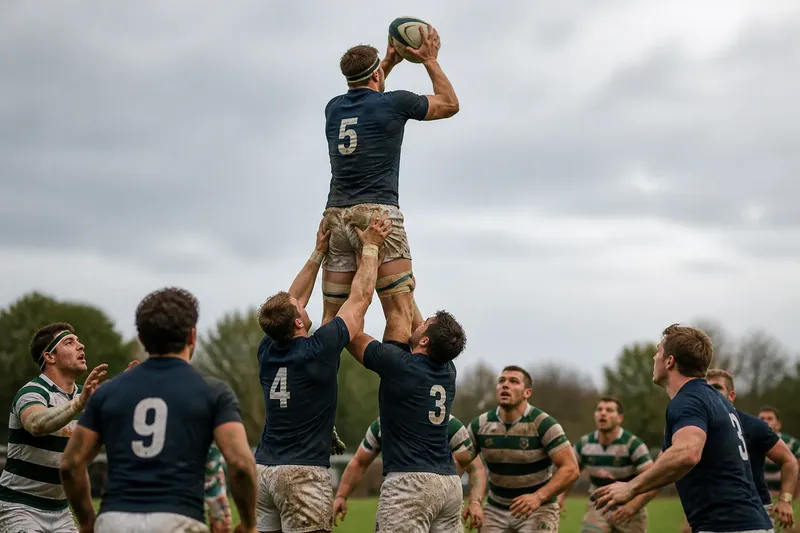
How does a rugby team turn a lineout throw-in into an attack rather than a brief pause? Start by tracking the call, the target and the catcher’s first decision: together, they show whether the team means to keep the ball close, transfer it or change its plan.
The restart picture
A lineout follows when the ball goes into touch and play restarts with a throw-in. The players form two lines, and the throw travels between them. Both teams can compete for the ball, so the attacking side has to coordinate its movements as well as its throw.
The thrower stands at the touchline. Teammates may lift a jumper, subject to the laws, and the catcher’s position and control influence what can follow. A secure catch offers time to choose; a tap or a disrupted throw calls for nearby support to react to the ball’s actual path.
Before the throw, the team has usually agreed on a broad intention: retain the ball in a close contest, transfer it to a nearby forward or move it away from the lineout. The call is only a starting point. The catcher and support players still have to respond to the defence and the quality of the possession.
Calls and targets
Teams use calls and movements to identify a target or disguise one. A signal might point to a jumper or a place in the line, while changes in timing can make the intended option harder to read. The opposing team watches these cues and can adjust its own contest.
Throw accuracy and jump timing work together. If the ball arrives out of rhythm, the jumper may reach awkwardly or the defence may have a chance to disrupt the catch. Lifters help the jumper reach the ball and return safely; other forwards prepare to secure it, bind around the catcher or peel away for a pass.
Those support movements are specific to the lineout. Watch where the catcher lands, which players stay close enough to protect the ball and which move towards an exit route. Their positions reveal whether the team is preparing to retain a compact platform or transfer possession before the defence closes in.
First-phase choices
A team with a controlled catch may form a maul, keeping the ball among bound players as they drive forward. This can draw defenders into a tight contest, but it commits attackers to close contact and depends on a stable formation. If the maul does not develop as intended, the team needs another way to play the ball.
A catcher can instead pass to a forward peeling from the lineout. That player may carry into a gap or pass again, keeping support nearby while shifting the point of contact. A transfer out of the lineout can also move possession towards the backs, but the pass needs a clear route and a receiver ready for pressure.
Imagine a team calls a catch near the front of its line. The catcher secures the ball, but defenders crowd the landing area; one forward is already moving away from the lineout. The catcher passes to that forward, who carries into the channel beside the crowded group. The observable result is a change of attack away from the initial contest, rather than a drive into the defenders gathered around the catcher.
Reading the contest
The defence’s arrangement helps explain the attacking choice. Several players close to the likely target may leave an opportunity to transfer the ball away; a wider defensive line may make a close carry more appealing. Neither picture settles the decision on its own, since defenders can move as soon as the throw is released.
Look at the space around the catcher and the routes available to support players. A defender near the touchline may be guarding against a transfer out of the lineout, while forwards close to the jumper may be preparing to contest or stop a drive. The attack needs a fallback if its preferred route is blocked.
That fallback should fit the possession the team actually has. If the catch is secure but the passing lane is closed, a nearby forward can help protect the ball. If the planned maul does not form, the players must recognise the change and act within the laws rather than continue with a formation that no longer exists.
When possession is untidy
A jumper may tap the ball rather than catch it, the throw may drift, or a defender may disrupt the attempt. Nearby players then need to react to where the ball goes, recover it legally and give the carrier support. A detailed move planned for a clean catch may no longer be suitable.
A tap can be part of a team’s plan, but it still depends on a teammate being ready to receive the ball and on the contest around them. If the ball travels beyond the intended receiver, players should follow its new path instead of continuing towards the original pattern.
The lineout ends under the circumstances set out in the current World Rugby Laws and any applicable competition provisions. In general, this includes the ball or a player carrying it leaving the lineout, and the ball being passed or carried out of it; other law provisions can also bring the lineout to an end. Where a ruling is disputed, check the current law text or ask a qualified referee, since the precise application depends on the circumstances.
Lineout throw-in questions?
Why lift a jumper?
A lift helps the jumper reach a ball above the contest and can help the team claim possession. The supporting players must coordinate the lift and return the jumper safely to the ground.
Why form a maul?
A maul lets the team keep possession close while attempting to drive forward. It can draw defenders into the contest, but the team also needs to recognise when the formation is not working and choose a lawful next action.
Can a throw target any teammate?
The throw must travel between the two lines of players along the lineout channel, rather than being sent directly to a teammate outside it. Teams can choose different targets within the lineout, provided the throw and players’ movements comply with the laws.
What happens after an uncaught throw?
Players continue to contest or recover the loose ball under the laws. The team that gains possession may still attack, but its next choice should reflect where the ball has gone and how much support is available.
Reading the launch
To follow a lineout throw-in, track the ball to its target, then watch what the catcher and nearby forwards do next. A bind around the catcher points towards a close contest; a player peeling away suggests a transfer; movement towards the open field may signal an attempt to get the ball out of the lineout.
The clearest clue is often the change between the call and the action. If the catch is messy or defenders close the intended route, the team may abandon its original plan. Reading that adjustment makes the lineout throw-in easier to follow and shows how a restart becomes the first phase of an attack.