The Offside Myth: Standing Behind the Ball Is Not the Whole Story
Rugby offside depends on the phase and your team-mates, not just the ball. Learn which line applies and how to judge a player's next move.
Rugby offside is not settled by checking whether a player stands behind the ball. To understand rugby offside, identify the phase first, then ask which line applies and whether the player has joined in before becoming onside.
A player may look behind the ball and still be offside; another may be ahead of it without committing an offence. The useful distinction is between being in an offside position and taking part while in that position.
Start with the phase
Use the ball as a clue, not a verdict. In open play, compare a player’s position with the team-mate carrying the ball or the team-mate who last played it. A ruck or maul has its own offside line, while a kick creates a separate question about players who were in front of the kicker.
For a quick viewing method, establish what is happening, then follow the player whose position looks questionable. Watch whether they retreat, are put onside under the applicable law, or interfere before that happens.
- Open play: If a player is in front of the team-mate carrying or last playing the ball, check whether they take part; if they do, an offside offence may result, but if they stay out and return onside, continue watching rather than assuming a penalty.
- Ruck: If the player is ahead of their side’s offside line, judge whether they enter play before the ruck ends or they are put onside; if they do, an offence may follow, but if they remain behind the line, play can continue.
- Maul: If the player is ahead of the line set by their side’s participants, check whether they advance into play; if they do before becoming onside, an offence may follow, but if they hold back, keep tracking the phase.
- Kick: If a team-mate was in front of the kicker when the ball was kicked, watch for retreat and any lawfully recognised action that puts them onside; if they interfere while still offside, an offence may follow, but if they stay out, the contest can continue.
- Opponent contact: If an offside player approaches an opponent waiting to receive the ball, assess whether the player advances or interferes before becoming onside; if so, the referee may penalise them, but if they retreat and do not affect play, wait for the next relevant action.
- Unclear transition: If it is uncertain whether the ball has left a ruck or maul, follow the referee’s signal and the ball’s movement; if the phase is still active, use its line, but if play has moved on, reassess under the new phase.
Open-play positions
In open play, a player can be offside if they are in front of a team-mate carrying the ball or in front of a team-mate who last played it. The ball may travel backwards past a support runner without putting that runner onside.
Being in front does not by itself settle whether an offence has occurred. An offside player must respect the relevant law: they may need to retreat or stay out of play, and interference with an opponent or the ball can bring a penalty.
Ruck and maul lines
At a ruck or maul, players not participating must stay behind the offside line for their side. In broad terms, that line is set by the hindmost participant, rather than by the ball; the exact application depends on the phase and the current laws.
This is why a defender can appear behind the ball but still be ahead of the line. Once the ball leaves the phase, reassess the situation rather than carrying the old line into the next passage of open play.
Kick and retreat rules
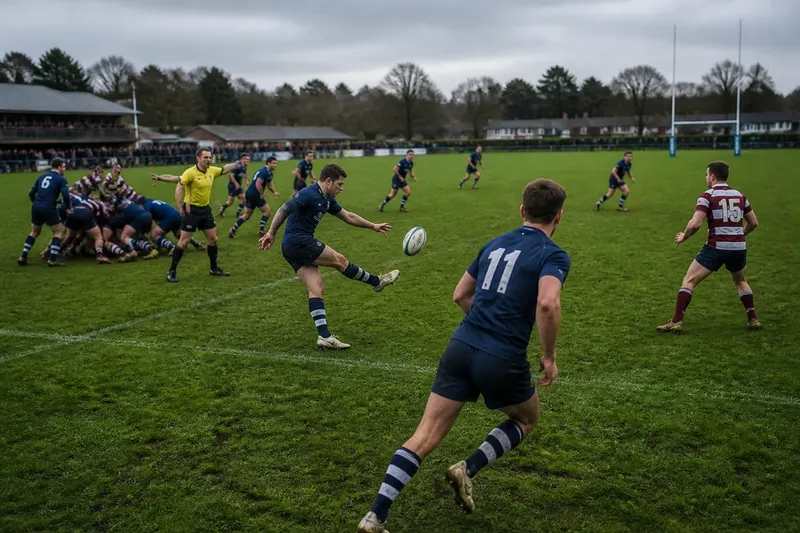
When a team-mate kicks, a player who was in front of the kicker may be offside. They must not advance towards an opponent waiting for the ball or interfere with play while offside. Retreating and staying out of the contest are the clearest actions to watch for.
The laws recognise particular ways an offside player may be put onside, including actions by an onside team-mate and certain actions by an opponent. The conditions matter, so do not treat an opponent’s touch or movement as an automatic reset; check the current World Rugby laws or ask a qualified referee if the exact ruling matters.
Say you are watching an invented situation: a fly-half kicks, and one of their team-mates is in front of the kicker. The player turns and retreats, avoiding the catcher and the contest; the observable result is that they do not interfere while offside, and you wait to see whether a lawfully recognised action puts them onside. If they instead advance towards the waiting catcher and affect the play before that point, the referee may penalise them.
Questions about rugby offside?
Can a player be behind the ball and offside?
Yes. In open play, the reference may be a team-mate carrying or last playing the ball, and a ruck or maul may set a line behind the ball. Check the phase and the relevant line rather than relying on the ball’s position alone.
Does standing ahead always mean a penalty?
No. The player’s position and participation are separate questions, and the applicable law determines what they must do next. Watch for interference, obstruction or another action that makes their offside position an offence.
What puts an offside player onside?
The answer depends on the situation and the law that applies. Retreating, an onside team-mate’s action or a qualifying opponent action may be relevant, but not every movement or touch has the same effect.
Why can the ruck line be behind the ball?
The line is based on the participants, not simply the ball’s location. If the ball is forward of the line, players still need to respect the applicable offside rules until the phase or their status changes.
Make the call readable
When an offside decision looks puzzling, pause the sequence just before the player joins in. Identify the phase, locate the relevant line, and then check whether the player was onside or had interfered while offside.
For rugby offside, “behind the ball” is only a starting clue. If you need to settle a disputed decision, consult the current World Rugby law book or a qualified referee, since the precise circumstances can change the ruling.